
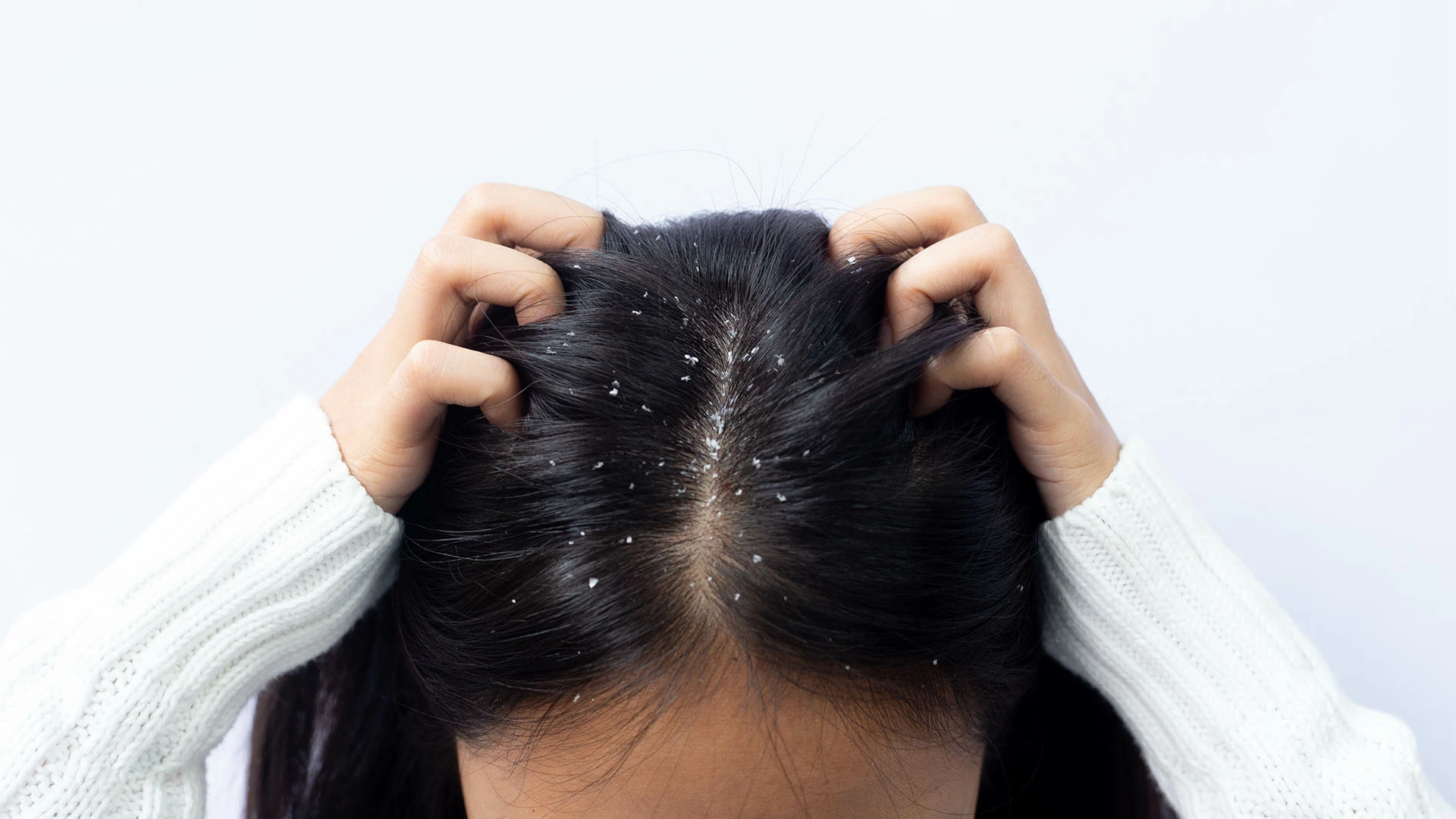
A little bit of white flakes on your shoulders can seem like a minor issue. You brush them away, change your shampoo, or simply tell yourself, “It’s just dandruff.”
But what if those flakes keep coming back?
For many people, dandruff is something they learn to live with instead of addressing properly. While occasional flaking can be common, persistent dandruff should not always be ignored. Repeated itching, irritation, and scalp flaking may indicate that your scalp needs more attention.
Understanding what can happen when dandruff is repeatedly ignored can help you decide when it is time to take your scalp health seriously.
Why Does Dandruff Happen?
Dandruff is associated with flaking of the scalp and can have several contributing factors. An oily scalp, certain skin conditions, sensitivity to hair-care products, and the growth of a naturally occurring yeast called Malassezia can be involved.
For some people, dandruff may be mild and occasional. For others, it can become a recurring problem accompanied by itching, redness, or scalp irritation.
This is why simply treating the visible flakes without understanding the underlying cause may not always solve the problem permanently.
What Happens When You Keep Ignoring Dandruff?
Ignoring dandruff once or twice isn’t necessarily a reason for concern. The bigger issue is persistent dandruff that continues for weeks or keeps returning despite basic care.
Here are some possible problems associated with leaving recurring scalp symptoms unattended:
- Persistent itching can make your scalp increasingly uncomfortable.
- Frequent scratching may irritate or damage the scalp surface.
- Ongoing inflammation can make existing scalp problems more troublesome.
- Flaking can become more noticeable and difficult to manage socially.
- Persistent scalp problems may sometimes occur alongside increased hair shedding.
These points don’t mean that dandruff automatically causes severe hair loss or permanent scalp damage. Rather, they highlight why recurring scalp symptoms deserve attention instead of being dismissed.
Constant Itching Can Become a Daily Irritation
One of the most frustrating parts of dandruff is the itching.
You may find yourself scratching your head while working, watching television, driving, or even talking to someone. The more you scratch, the more irritated the scalp can become.
And then another problem begins—the urge to scratch becomes difficult to control.
Repeated scratching can cause small breaks in the skin, potentially increasing irritation and making the scalp more uncomfortable.
Scratching Isn’t the Solution
When your scalp is itchy, scratching can feel like the quickest way to get relief.
Unfortunately, it doesn’t address the reason behind the itching.
Aggressive or repeated scratching may irritate the scalp further and can sometimes cause minor skin injuries. Keeping fingernails short and avoiding vigorous scratching can help reduce unnecessary irritation while the underlying scalp concern is addressed.
Can Dandruff Cause Hair Fall?
This is one of the most common questions people ask.
Dandruff itself does not automatically mean that you will lose your hair permanently. However, persistent scalp irritation, inflammation, and repeated scratching can contribute to increased shedding or breakage in some individuals.
There can also be another reason for increased hair fall: the condition you think is “just dandruff” may actually be another scalp or skin condition.
If you are experiencing significant or persistent hair shedding along with dandruff, it is better to have the scalp properly evaluated rather than assuming the two are unrelated.
Don’t Confuse Dandruff With Every Type of Scalp Flaking
Not every flaky scalp is simply dandruff.
Conditions such as seborrheic dermatitis, psoriasis, eczema, contact dermatitis, or certain fungal infections can also cause scaling or irritation.
The symptoms can sometimes look similar to an untrained eye.
This is why repeatedly changing shampoos without understanding the cause may not give you the result you expect.
Your Scalp Needs Attention Too
We spend a lot of time caring for our hair—choosing shampoos, conditioners, oils, masks, and styling products.
But the scalp often gets overlooked.
Your scalp is where your hair grows, so maintaining a healthy scalp environment is an important part of overall hair care.
If you regularly experience excessive flaking, itching, redness, sensitivity, or irritation, don’t simply cover up the symptoms. Try to understand what your scalp is telling you.
When Should You See a Professional?
Occasional mild dandruff may be manageable with appropriate over-the-counter dandruff care. However, professional evaluation can be useful when the problem is persistent, severe, or keeps returning.
Consider seeking professional advice if you notice:
- Dandruff that doesn’t improve with appropriate care
- Persistent or intense scalp itching
- Redness or inflammation
- Thick or extensive scaling
- Sores caused by scratching
- Noticeable hair shedding along with scalp symptoms
- A scalp problem that repeatedly returns
A professional can examine your scalp and determine whether the symptoms are consistent with dandruff or whether another condition may be involved.
Avoid Random Treatment after Random Treatment
When dandruff doesn’t disappear, many people start experimenting.
One week it is an anti-dandruff shampoo. The next week it is a new oil. Then comes a home remedy found online.
The problem is that constantly switching products may make it difficult to understand what is actually helping—or irritating—the scalp.
Instead of trying everything at once, it is better to identify the likely cause and follow an appropriate scalp-care or treatment plan consistently.
Small Changes Can Make Scalp Care Easier
Good scalp care doesn’t necessarily mean having a complicated routine.
Using products appropriate for your scalp type, washing your hair regularly according to your needs, avoiding excessive scratching, and paying attention to recurring symptoms can all be part of maintaining scalp health.
Most importantly, don’t ignore a problem simply because it seems common.
Final Thoughts
Dandruff may be common, but persistent dandruff shouldn’t automatically be treated as something you have to live with.
If your scalp repeatedly flakes, itches, becomes irritated, or shows other unusual changes, there may be an underlying reason that deserves attention.
The good news is that recognizing the problem early gives you an opportunity to understand it and manage it appropriately.
So, the next time you notice those familiar flakes on your shoulders, don’t just brush them away and forget about them.
Listen to your scalp. Persistent symptoms are worth understanding.