
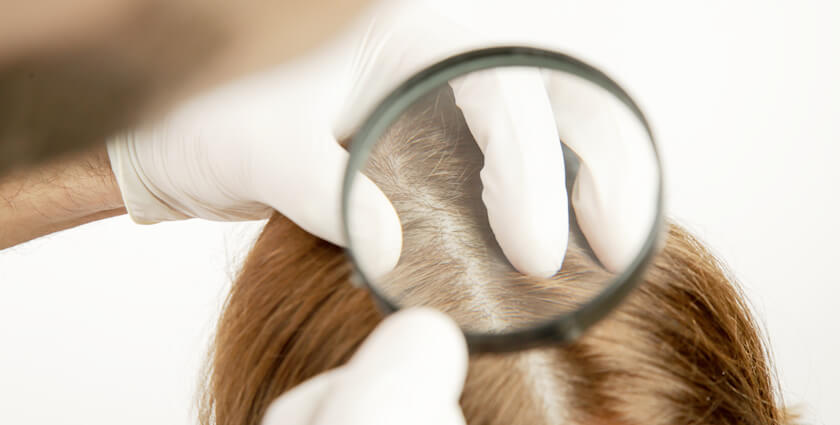
We often pay attention to our hair only when we notice excessive hair fall, thinning, dandruff, or other visible changes. But your hair can sometimes show signs of an underlying scalp or hair concern before the problem becomes obvious. This is why a hair and scalp checkup can be an important part of maintaining healthy hair.
When Should You Consider a Hair and Scalp Checkup?
You don’t necessarily have to wait until you experience severe hair loss. Consider getting your hair and scalp evaluated if you notice:
- Sudden or persistent hair fall
- Gradual thinning or reduced hair density
- Receding hairline or widening hair part
- Persistent dandruff or scalp flaking
- Itching, redness, or irritation
- Excessively oily or unusually dry scalp
- Hair becoming noticeably weaker or more brittle
- Small bald patches appearing on the scalp
- Changes in hair texture or growth
If any of these changes continue or become more noticeable, professional evaluation can help you understand what may be happening.
Why Is a Hair and Scalp Checkup Important?
Hair problems can have different causes, and the same symptom may occur for completely different reasons. For example, increased hair shedding may be associated with hereditary hair loss, nutritional problems, hormonal changes, stress, certain medications, or scalp conditions.
A professional checkup allows the condition of your hair and scalp to be assessed instead of simply guessing which treatment might work.
Finding the Problem Early Can Be Helpful
One of the biggest benefits of a timely checkup is understanding a problem before it becomes more difficult to manage. Early evaluation can help identify changes in hair density, scalp health, or hair growth patterns and allow appropriate care to be considered.
This is particularly useful when hair thinning is gradual because people may not notice the change until a significant amount of density has already been lost.
What Happens During a Hair and Scalp Checkup?
Depending on your concerns, a specialist may examine the scalp, hair density, hair shaft, and pattern of hair loss. They may also ask about your recent health, lifestyle, diet, stress levels, family history, and hair-care habits.
If necessary, additional tests may be suggested to look for possible underlying factors. The purpose is to understand the reason behind the hair or scalp problem and select an appropriate course of action.
Don’t Choose a Treatment Just Because It Is Popular
Hair treatments are not one-size-fits-all. PRP, medical hair spa, topical treatments, supplements, and other approaches may be suitable in different situations. Choosing a treatment without understanding the actual cause of the problem may lead to unnecessary expense or disappointment.
A proper checkup helps you make a more informed decision about your hair-care or hair-restoration plan.
Final Thoughts
A hair and scalp checkup can be worthwhile whenever you notice unusual changes in your hair or scalp, particularly when they persist or are getting worse. More importantly, you don’t have to wait for severe hair loss before seeking professional advice.
Understanding your hair’s condition is the first step toward choosing the right care. Instead of trying random products or treatments, a professional assessment can give you a clearer idea of what your hair and scalp actually need.