
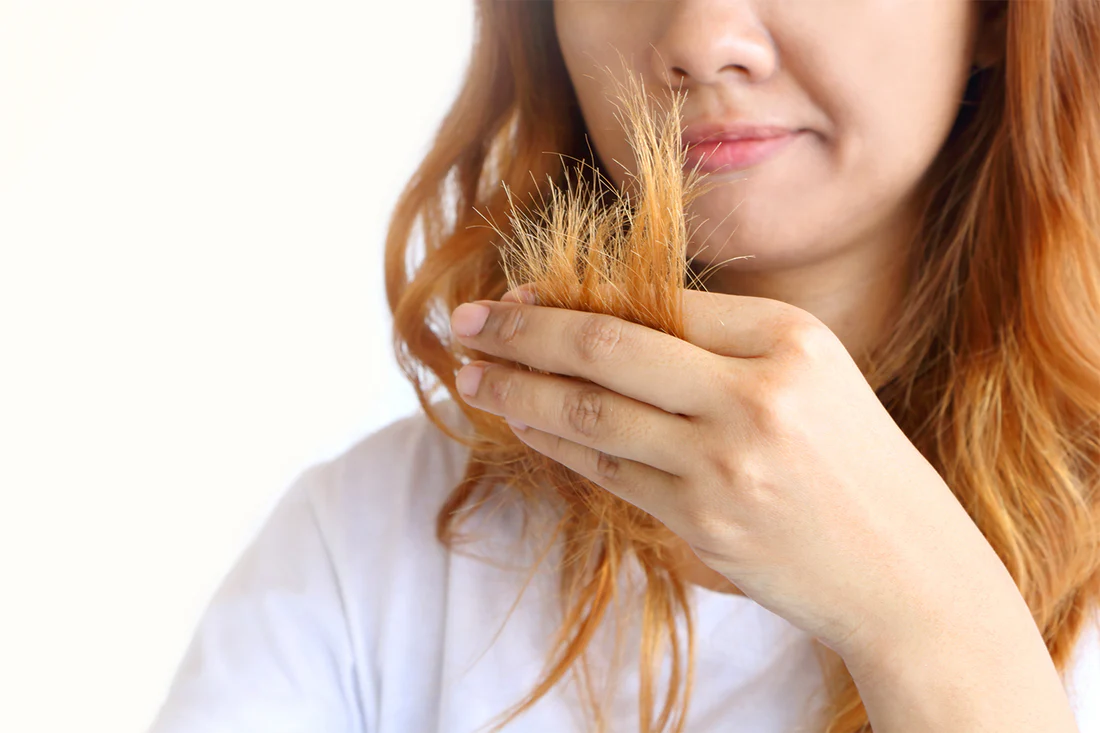
Hair breakage doesn’t happen overnight. It’s a gradual process that starts silently, often going unnoticed until your hair begins to look dry, frizzy, and thinner than before. Understanding when breakage begins and identifying its early signs can help you take action before the damage worsens.
What Causes Hair Breakage?
Hair breakage is the result of weakened hair strands that snap easily due to internal or external stress. Some common causes include:
1. Excessive Heat Styling
Frequent use of hair dryers, straighteners, or curling irons can strip your hair of its natural moisture, making it brittle and prone to breakage.
2. Chemical Treatments
Hair coloring, rebonding, or perming can damage the cuticle layer of your hair, weakening its structure over time.
3. Lack of Proper Nutrition
A diet low in protein, iron, and vitamins can affect the strength and growth of your hair, making it more fragile.
4. Rough Handling
Combing wet hair harshly, tight hairstyles, or sleeping on rough pillowcases can physically stress and weaken your strands.
5. Environmental Stress
Sun exposure, pollution, and harsh weather conditions can dehydrate hair, leading to dullness and breakage.
When Does Hair Breakage Start?
Hair breakage usually begins when your hair cuticles — the outer protective layer — start to lift or wear away. This can happen gradually due to overexposure to heat, chemicals, or dryness. Initially, you may notice minor roughness or tangling, which then progresses to visible thinning, frizz, and split ends if left untreated.
There’s no fixed time frame for when breakage starts — it depends on your hair care habits and environmental exposure. However, early intervention can make a big difference in preventing severe damage.
Common Signs of Hair Breakage You Shouldn’t Ignore
1. Uneven Hair Lengths
If you notice shorter pieces of hair that stick out, especially near the crown or around the face, it’s likely breakage rather than new growth.
2. Split Ends
Split or frayed ends are the most visible signs of damage. When your hair shaft starts splitting, it indicates that your hair’s structural integrity has weakened.
3. Excessive Frizz
Frizz that doesn’t respond to conditioners or oils often signals cuticle damage and moisture loss.
4. Rough and Dull Texture
Healthy hair feels smooth and shiny. If your hair feels coarse and looks lifeless even after washing, it could be breaking internally.
5. Increased Hair on Clothes or Pillow
Finding short, broken strands on your pillow, shoulders, or clothing suggests that your hair is snapping off rather than falling from the root.
6. Tangling and Knots
Damaged hair tends to tangle more easily because of raised cuticles and uneven texture.
7. Slow Growth or Thinning Appearance
You may feel your hair isn’t growing, but in reality, it’s breaking off as fast as it grows — giving the illusion of stagnant growth.
How to Prevent and Control Hair Breakage
- Use a gentle, sulfate-free shampoo and nourishing conditioner.
- Limit heat styling and always apply a heat protectant spray.
- Incorporate deep conditioning or protein treatments regularly.
- Eat a balanced diet rich in proteins, vitamins, and minerals.
- Avoid tight hairstyles that pull on your roots.
- Trim your hair every 6–8 weeks to remove split ends.
Final Thoughts
Hair breakage is often a sign that your hair is crying out for care. Ignoring it can lead to long-term thinning and loss of natural shine. The good news is that early recognition and consistent care can restore your hair’s health and prevent further damage.
Healthy hair starts with attention — notice the signs, treat them early, and protect your strands from everyday stress.