
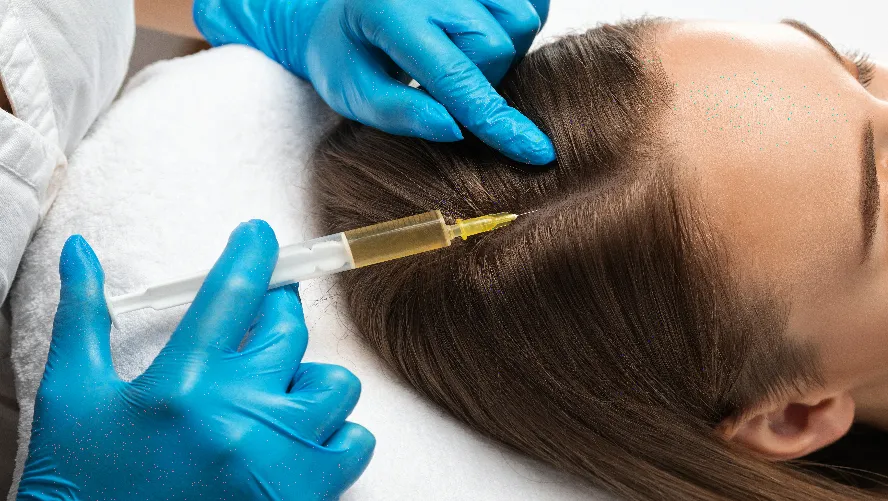
Hair loss can be frustrating, especially when you notice your hair becoming thinner or your scalp becoming more visible. While surgical hair restoration is an option for some people, many prefer to explore non-surgical treatments first. One such option is PRP (Platelet-Rich Plasma) treatment, which uses components from your own blood to support the hair follicles.
What Is PRP Hair Treatment?
PRP therapy is a non-surgical procedure that begins with a small blood sample taken from the patient. The sample is processed to separate platelet-rich plasma, which contains growth factors. This concentrated plasma is then carefully injected into areas of the scalp where hair thinning is occurring.
The idea behind the treatment is to create a supportive environment for existing hair follicles. Since the plasma comes from the patient’s own blood, PRP is considered an autologous treatment.
Why Consider PRP for Hair Loss?
One of the biggest reasons people consider PRP is that it does not involve surgery or hair transplantation. There are no grafts to harvest or implant, making it an appealing option for people who want a less invasive approach.
PRP may also be considered when hair follicles are still present but producing weaker or thinner hair. By supporting the scalp and existing follicles, the treatment may help improve the overall appearance of hair density over time.
A Treatment That Uses Your Own Blood
Another interesting aspect of PRP is that it uses your own biological material rather than introducing a foreign substance. The platelet-rich plasma is prepared from your own blood and applied to the scalp.
However, this does not mean PRP is suitable for everyone. The results can vary depending on the reason for hair loss, the condition of the follicles, age, overall health, and other individual factors.
What Can You Expect From PRP Treatment?
PRP is generally performed as an outpatient procedure. A typical session involves blood collection, preparation of the platelet-rich plasma, and injections into selected areas of the scalp.
Some people may experience temporary redness, swelling, tenderness, or mild discomfort after treatment. Hair growth is not immediate either. If PRP works for an individual, visible improvement generally takes time because hair naturally grows through different cycles.
Is PRP Better Than Surgical Hair Restoration?
Not necessarily. PRP and surgical hair restoration serve different purposes. PRP focuses on supporting existing follicles, whereas a hair transplant involves moving hair follicles from one area of the scalp to another.
For someone with early-stage thinning or weakened existing hair, a non-surgical approach may be worth discussing before considering surgery. A qualified hair specialist can assess the cause and pattern of hair loss and explain which options make sense.
The Importance of Professional Evaluation
Choosing PRP simply because it is non-surgical is not enough. Hair loss can have many causes, including hereditary factors, hormonal changes, nutritional deficiencies, certain medical conditions, stress, and scalp problems. Treating the underlying cause is important.
A professional evaluation can help determine whether PRP is an appropriate option and whether another treatment or a combination of treatments would be more suitable.
Final Thoughts
PRP treatment can be an attractive non-surgical option for people looking to support existing hair follicles without undergoing a hair transplant. Its use of the patient’s own platelet-rich plasma, relatively straightforward procedure, and minimal downtime make it worth discussing with a qualified specialist.
Most importantly, there is no single hair-loss treatment that works equally well for everyone. Understanding the cause of your hair loss and setting realistic expectations can help you make a more informed decision about whether PRP is right for you.